Mold in a Rental Property in New Orleans: What Tenants Can Do, What Landlords Must Fix
Finding mold in a rental home puts two people in a difficult spot: the tenant lives with it, the landlord owns the building. In New Orleans, where humidity stays high and much of the rental stock is old and raised on piers, the question is always the same: who has to do what, and in what order? This guide covers both sides: what tenants should do first, what landlords must fix, and where the Healthy Homes Ordinance fits in.
Key takeaways
- Photograph the mold and notify your landlord in writing before you clean or disturb anything.
- A landlord cannot fix mold by painting over it; proper remediation removes the growth and the moisture.
- New Orleans’ Healthy Homes Ordinance bans interior mold in rentals, and RestoreAdvisor reports more than $420,000 in fines so far.
- An inspection with a written scope protects both sides: the tenant gets a documented finding, the landlord gets a clear job to approve.
Why rental homes in New Orleans grow mold
New Orleans gives mold almost everything it needs: around 63 inches of rain a year, according to RestoreAdvisor, plus high humidity. Many rentals are older homes, shotgun houses and doubles on pier-and-beam foundations, with plaster walls and storm-worn roofs. A slow roof leak, a dripping supply line, or a drain pan that never quite drains can keep a wall damp for months, and the only sign is a stain that keeps coming back.
That history matters for rentals. A tenant may not know about a leak two years ago, or that a previous tenant painted over a stain instead of fixing the dampness. Growth inside a wall can go unseen for a long time, which is why the first steps here are about evidence, not cleaning.

What tenants should do first
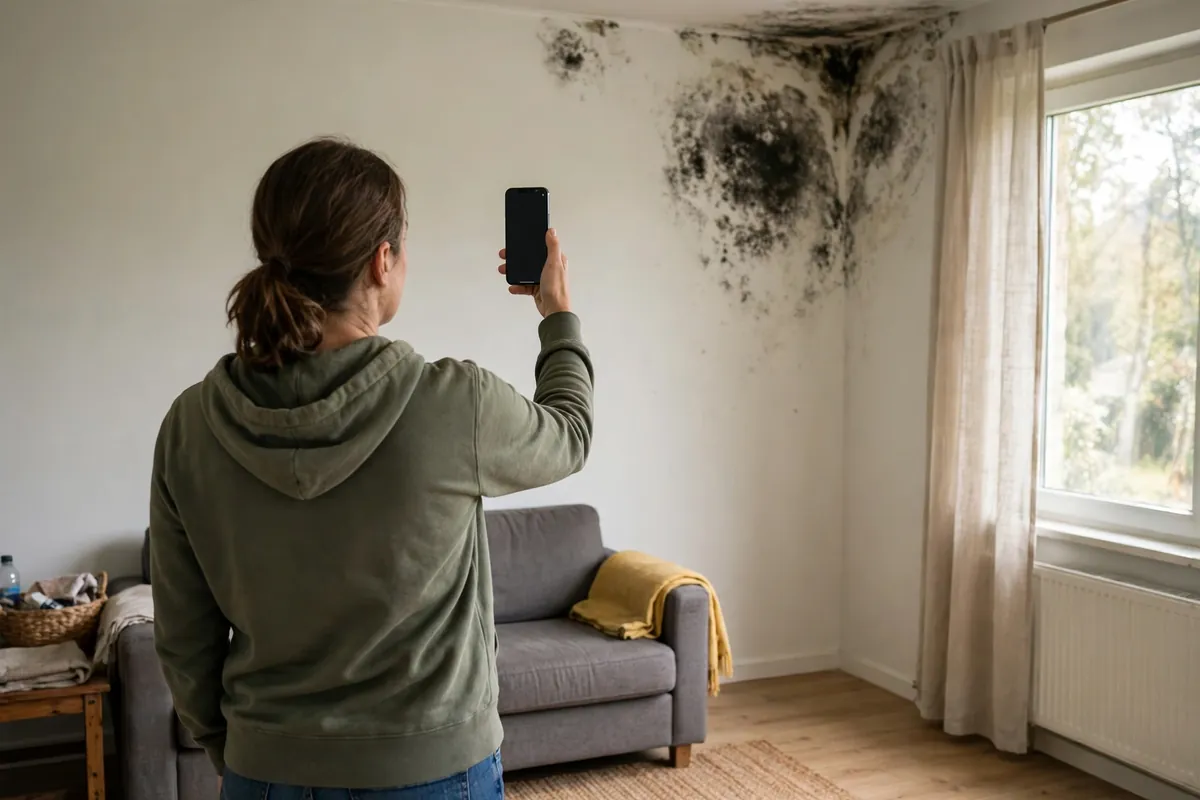
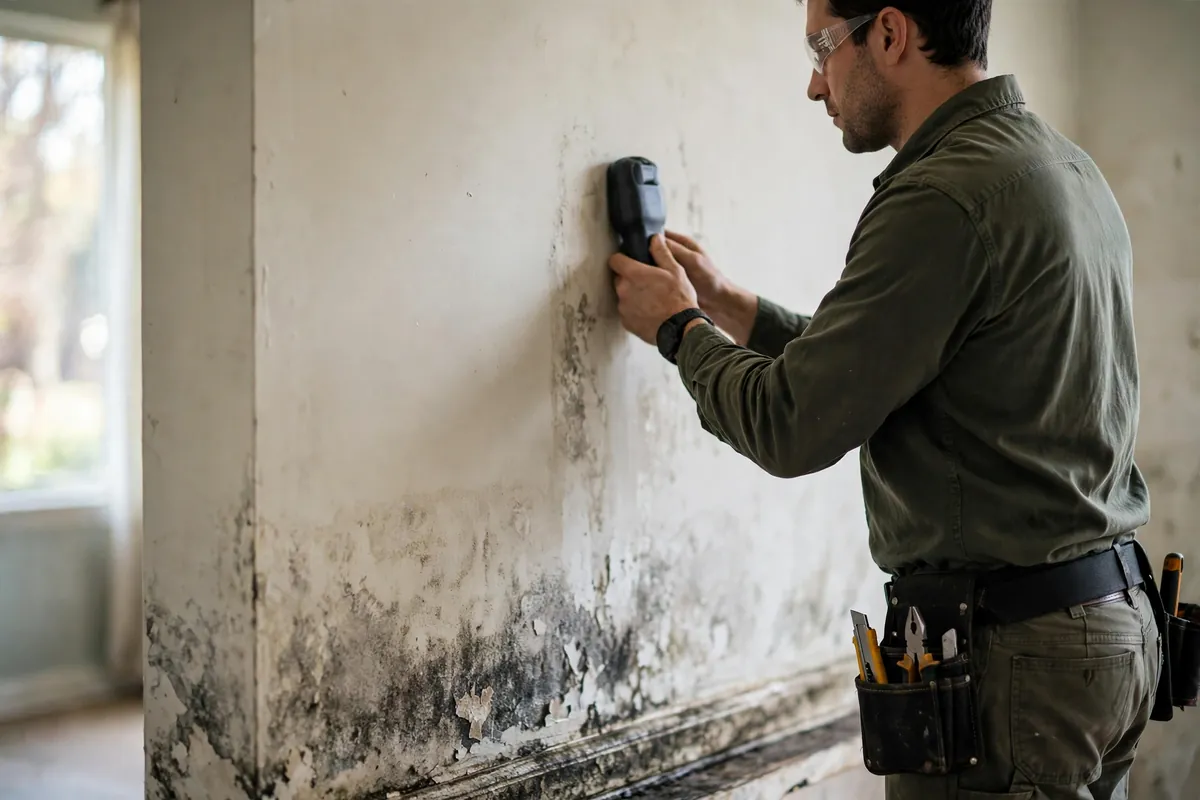
Start with photographs, not with a scrub brush. Photograph every patch, wide shots of the room and close shots of the growth, and the water source too if you can see one: a stained ceiling below a bathroom, a damp wall behind a water heater, a leaking window. Note the date on each photo. If the patch is in a closet or behind furniture, photograph that too: growth in a hidden spot says a lot about how long the dampness has been there.
Then notify your landlord in writing. An email or text message counts as a written record, and it beats a phone call, which leaves no trace. Describe what you found, where it is, and when you first noticed it, and attach the photos. Keep a copy of everything. Louisiana landlord guides from iPropertyManagement (updated August 2026) and Hemlane (2026) both stress written notice: it starts the clock, and it is the record you need if the problem drags on.
Do not scrub a wide area or tear out material yourself. Disturbing growth spreads spores and destroys the evidence of where the moisture is coming from. A small surface patch on tile can be wiped, but growth on drywall, wood, or carpet should be left alone until someone has looked. If the landlord does not respond, keep the paper trail going with a second dated message referring back to the first. Louisiana landlord guides describe a repair-and-deduct option, but it has conditions, including written notice first and a reasonable time for the landlord to act, so get advice before you deduct anything.
What landlords must fix
A landlord’s job is remediation, not cover-up. Louisiana landlord guides from iPropertyManagement (updated August 2026) and Hemlane (2026) say a landlord must address mold rather than paint over it. Painting over growth hides the stain for a few weeks while the material behind the paint stays damp and the growth continues. The patch comes back, usually worse, and the next tenant inherits the same problem.
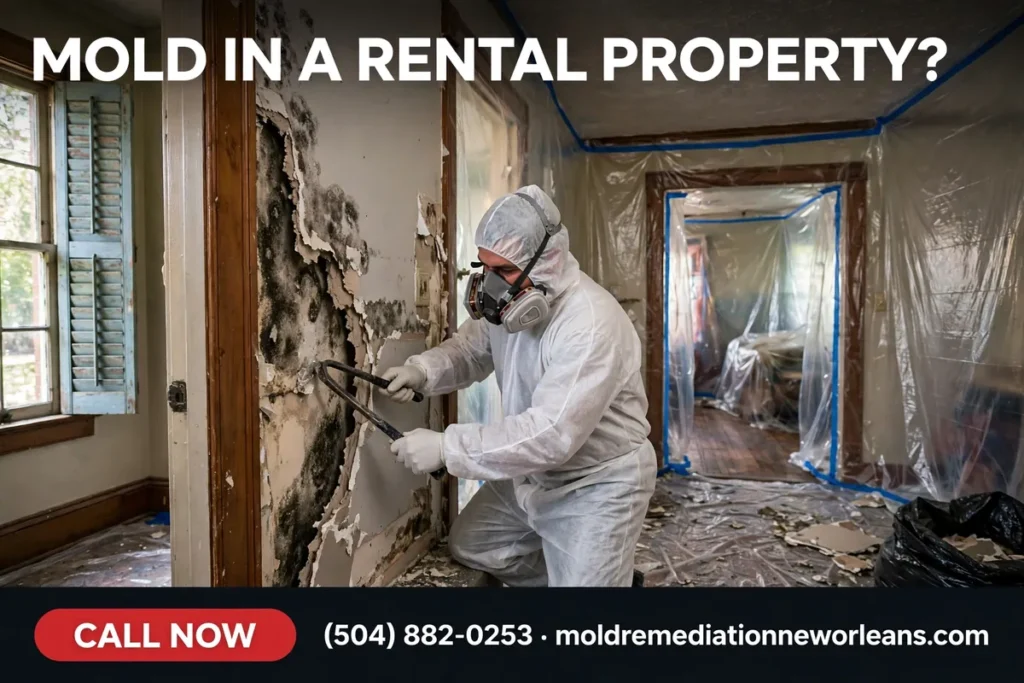
A proper job follows a clear sequence: find the water source, contain the area, remove the affected material, dry the structure, and verify with independent clearance testing. That last step matters most in a rental, because the clearance report is the landlord’s proof that the job was finished. For a formal, documented job, see how formal abatement works: a written scope before work starts, photographs during the work, moisture readings showing the structure dried, and a clearance report from a separate party. A landlord who keeps that file has an answer ready for the next tenant or buyer.
The Healthy Homes Ordinance in New Orleans
New Orleans has its own rule on top of the general landlord duty. The city’s Healthy Homes Ordinance bans interior mold in rental units and was fully phased in during January 2025, according to RestoreAdvisor. The same source reports the city has already levied more than $420,000 in fines under the ordinance. A tenant’s written complaint can become a city enforcement matter, and the fines are real money.
For tenants, the ordinance is a reason to follow the written-notice steps above instead of arguing in person. For landlords, it is a reason to treat a mold report as a repair job with a deadline. A written inspection scope and a clearance report show the city, the tenant, or a future buyer that the problem was taken seriously and finished properly.
When to call for an inspection
Call for an inspection when the growth keeps returning after cleaning, when you cannot find the moisture source, when a tenant and a landlord disagree about how bad the problem is, or when either side needs a written finding for a claim or a dispute. An inspection maps how far the dampness has travelled, checks for hidden growth inside walls and under floors, and produces a written scope that says exactly what will be removed, dried, and verified.
That written scope turns an argument into a job. The tenant gets a documented finding to attach to the written notice. The landlord gets a defined scope to approve and a price basis, not an open-ended complaint. See how a mold inspection works, including moisture mapping and when sampling is worth it. If the job needs formal documentation, the same scope carries straight into abatement.
Can a landlord deduct mold damage from the security deposit?
It depends on what caused the damage and what the lease says. A landlord generally cannot charge a tenant for mold that came from a leaking roof, old plumbing, or long-term dampness the tenant did not cause. Those are building problems, and they belong to the owner. Damage the tenant caused is different: never running ventilation, or ignoring a leak for months. Even then, the lease wording matters, and the landlord has to show the damage, not just claim it.
Either way, the paper trail decides it. Dated photos from move-in and from the day the mold was found, the written notice, and a written inspection scope settle a deposit argument. Keep everything until the deposit is returned. Photograph the home on move-in day, closets and under sinks included, so there is a baseline for both sides.
Does a landlord have to disclose mold?
Louisiana’s property disclosure form asks about mold, mildew, and water problems, according to RestoreAdvisor. The form is knowledge-based: the seller or landlord answers what they know. A landlord who knows about mold and says nothing risks a claim later, because a hidden problem tends to come back as a dispute after move-in or a sale.
A documented removal turns that risk into a closed item. Photos from the work, a written scope, and a clearance report show the problem was found, fixed, and verified. For tenants, ask directly before signing whether the home has ever had mold or water damage, and get the answer in writing.
Frequently asked questions
Is my landlord required to fix mold in my New Orleans rental?
Yes, in practice. Louisiana landlord guides say a landlord must remediate mold rather than cover it up, and the city’s Healthy Homes Ordinance bans interior mold in rentals. Notify your landlord in writing first and keep a copy.
Can I withhold rent until the mold is fixed?
Do not withhold rent on your own. Louisiana landlord guides describe a repair-and-deduct option, but it has conditions: written notice first, a reasonable time for the landlord to act, and receipts for any work you pay for. Get advice before you deduct anything.
Can my landlord just paint over the mold?
No. Painting over mold does not remove it or fix the moisture behind it. The growth continues behind the paint and comes back. A proper job removes the affected material, dries the area, and verifies it with clearance testing.
Who pays for a mold inspection in a rental?
It depends on the situation and the lease. Tenants often arrange one to document a problem, and landlords often arrange one to scope a repair. Either way, a written report helps both sides, and it usually costs less than opening walls without a plan.
If mold in your rental keeps coming back, or you and your landlord disagree about what needs doing, call (504) 882-0253 to arrange an inspection.