
Mold on Walls: Removal, Causes, and Warning Signs
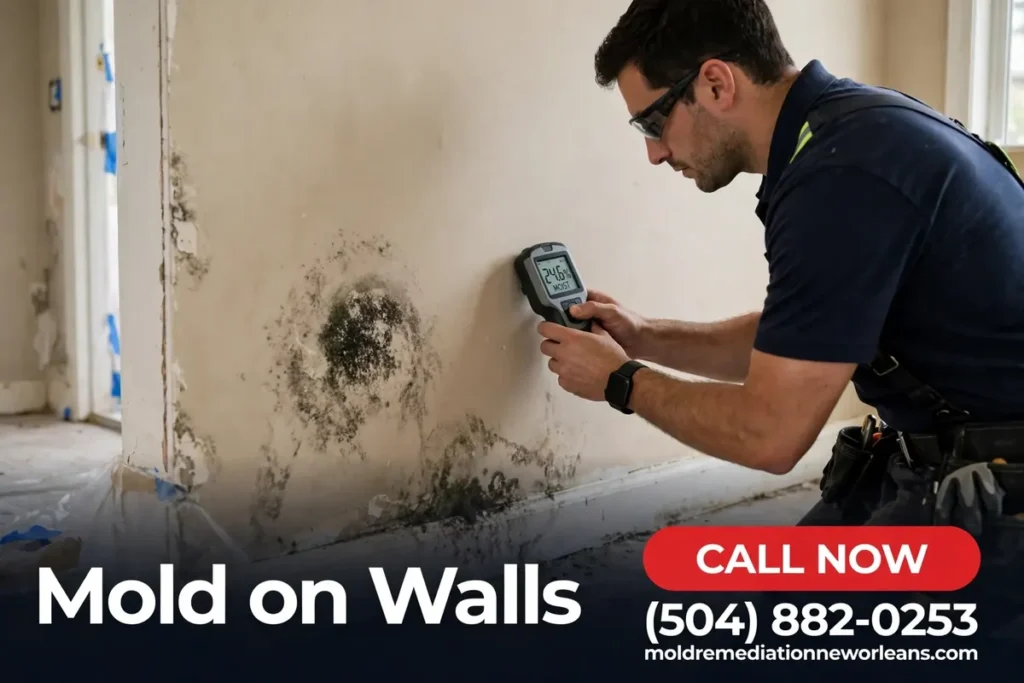
Mold on a wall is rarely just a wall problem. Walls hide plumbing, condensation points, and slow leaks — so a patch on the surface is often the visible end of a moisture problem inside the wall. Understanding the cause matters more than the cleaning product.
Key takeaways
- Wall mold is usually the visible end of a moisture problem inside the wall.
- In New Orleans, humidity slows drying, so damp walls stay damp far longer.
- A patch that returns, a soft or bubbled wall, or peeling paint all point to a bigger problem.
- Drywall is porous — growth inside it cannot be scrubbed out; the affected section usually needs removal.
Common causes of wall mold
- Plumbing leaks. A slow pipe or fitting leak inside the wall keeps drywall damp for weeks before anything shows.
- Condensation. Cold wall surfaces in a humid home collect moisture, especially in poorly ventilated rooms.
- Roof or window leaks. Water travels down framing and shows up far from where it entered.
- Flooding or past water damage. Walls that were never fully dried after a flood keep growing long after the event.
In New Orleans, humidity amplifies every one of these. A wall that stays damp in a humid home dries far more slowly than the same wall in a dry climate, which is why local homes need drying equipment, not just open windows, after water intrusion.
Cleaning limits: what you can and cannot clean
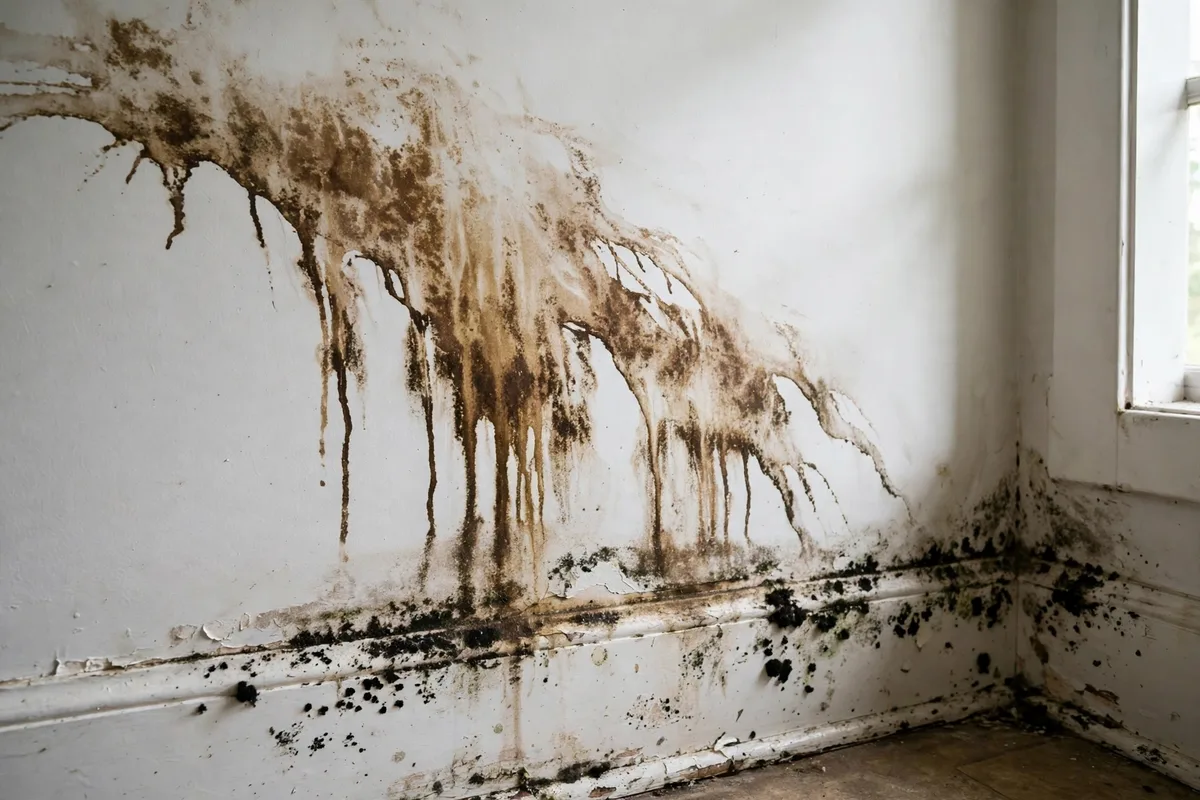
A small patch on painted, sealed wall surfaces can be cleaned like any surface growth. But growth on bare drywall, or a patch that returns after cleaning, usually means the drywall itself is affected. Drywall is porous — growth inside it cannot be scrubbed out, and the affected section typically needs removal rather than cleaning. Painting over it only hides the problem.
Warning signs of a bigger problem
- The patch returns after cleaning, or spreads along the wall.
- The wall feels soft, bubbled, or warped.
- Paint peels or wallpaper bubbles near the patch.
- The room smells musty even when the patch is small.
- There is a stain trail from a ceiling, window, or corner.
What to do next
For a small surface patch with a known, fixed cause — a one-time condensation spot, now ventilated — cleaning and monitoring is reasonable. For anything recurring, soft, spreading, or near plumbing, get an inspection before cleaning further: disturbing growth on drywall spreads spores, and the moisture source still needs finding. Our Mold Removal New Orleans team inspects wall mold across the city, mapping how far moisture travelled before any removal is scoped.
How inspection maps a wall problem
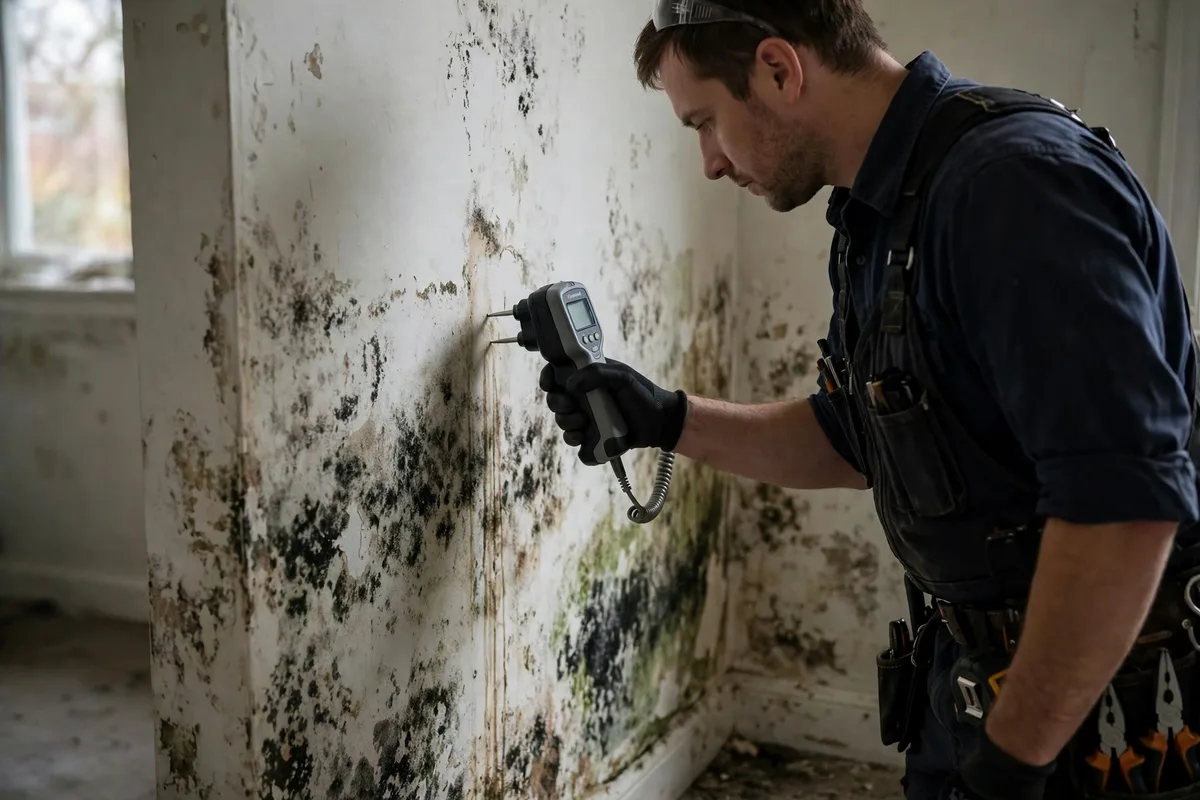
An inspection starts by finding how far the dampness has travelled, not just where the stain sits. The technician takes moisture readings along the wall, across the baseboard, and on the wall behind it if the room shares a wall with a bathroom or kitchen. Readings are compared room by room, so the damp area shows up as a map rather than a guess. The stain trail is then traced back to its source: a fitting or pipe inside the wall, a window frame that lets rain in, or a roof leak that travelled down the framing. Knowing the source matters because removal without fixing the source only buys a few weeks before the patch returns. The result is a written scope that lists exactly which sections of drywall are affected and what has to dry before any rebuilding starts.
What happens to the wall after removal
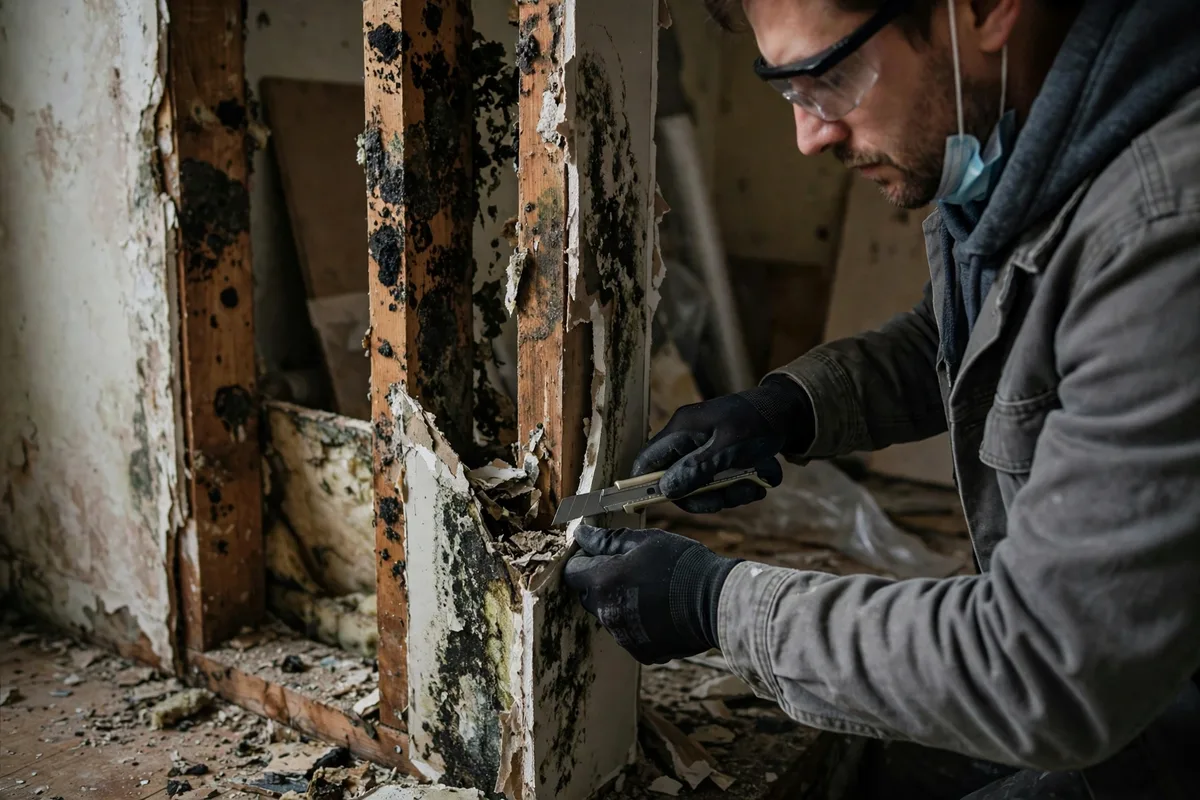
Once the scope is set, the affected drywall section is cut out and bagged, and the framing behind it is exposed so it can dry. Air movers and a dehumidifier run until moisture readings show the framing and the surrounding drywall are dry. Nothing is rebuilt while the wall is still damp, because closing a wet wall in traps moisture and the growth returns. Once readings confirm the area is dry, new drywall goes in, joints are finished, and the wall is painted after the compound has dried. The finished wall should look like the rest of the room, with no stain bleeding through and no soft spots left behind. If the leak that caused the problem is a plumbing repair, that fix happens before the wall is closed, not after.
Frequently asked questions
Can I paint over mold on a wall?
No. Paint seals the surface while growth continues underneath, and the moisture problem stays untouched.
Does mold on a wall mean the whole wall must be removed?
Not always. Removal is scoped to the affected area after moisture mapping — sometimes a section, sometimes more. An inspection determines the extent.
How do I know if wall mold is from a leak?
Recurring patches in the same place, soft or bubbled drywall, and stains near plumbing or windows all point to a leak. A moisture meter reading during inspection confirms it.
How long does a wall take to dry after a leak is fixed?
It depends on how wet the drywall and framing got. A small damp patch dries much faster than a soaked section, and drying equipment shortens the time. The wall is checked with a moisture meter, and rebuilding only starts once readings show it is dry.
If wall mold keeps returning or the wall feels soft, call (504) 882-0253 to arrange an inspection.