How to Get Rid of Mold
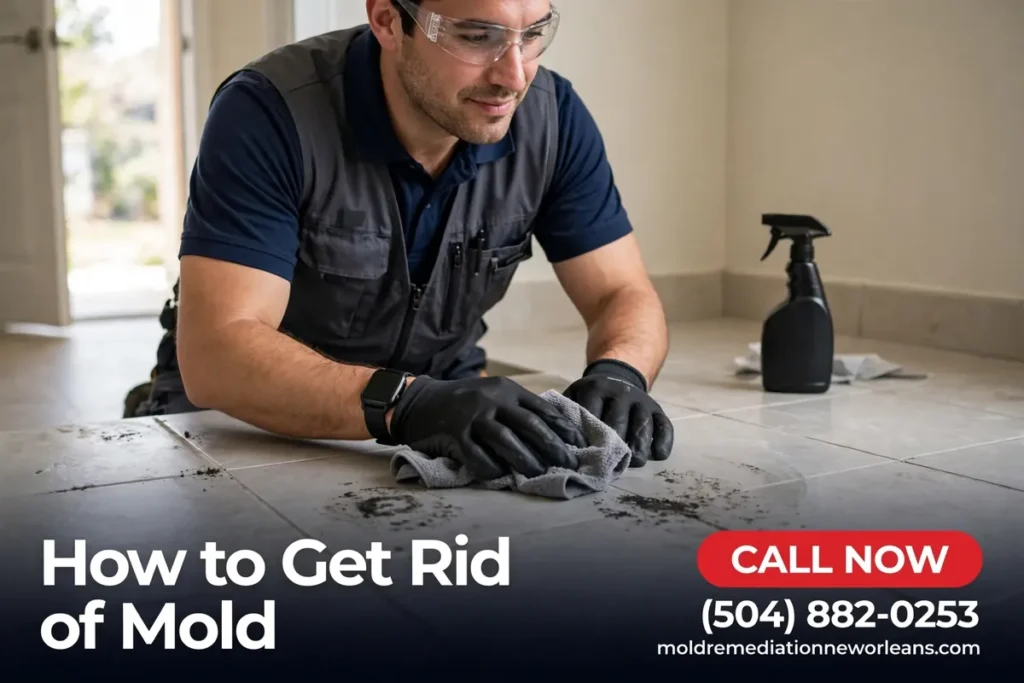
Small, surface-level mold can often be handled safely at home. The key word is small — and the key rule is that cleaning only works when you also fix the moisture that caused the growth. This guide covers what you can do yourself, and where to stop.
Key takeaways
- Handle it yourself only when the patch is small, on a hard surface, fully visible, and the moisture source is known.
- Cleaning works only when you also fix the moisture that caused the growth.
- Never paint over mold, and never scrub drywall hard — both make it worse.
- If a cleaned patch returns within two to three weeks, the growth or moisture goes deeper than the surface.
First: size up the job
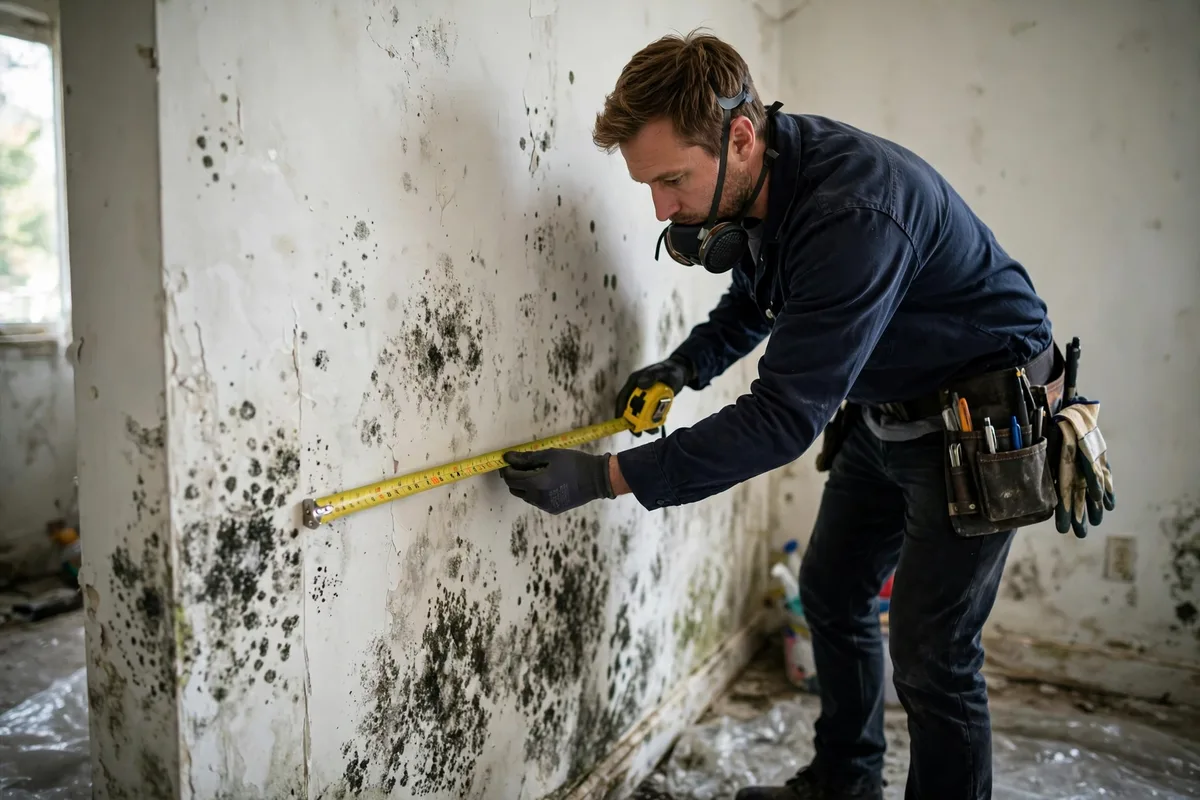
Handle it yourself only when all of these are true: the patch is small, it sits on a hard, non-porous surface such as tile, glass, or a sealed countertop, you can see all of it, and you know where the moisture came from. If any of those fails — the patch is large, it is on drywall or wood, it is hidden, or the moisture source is unknown — that is a professional job, not a cleaning job.
Safe steps for a small surface patch
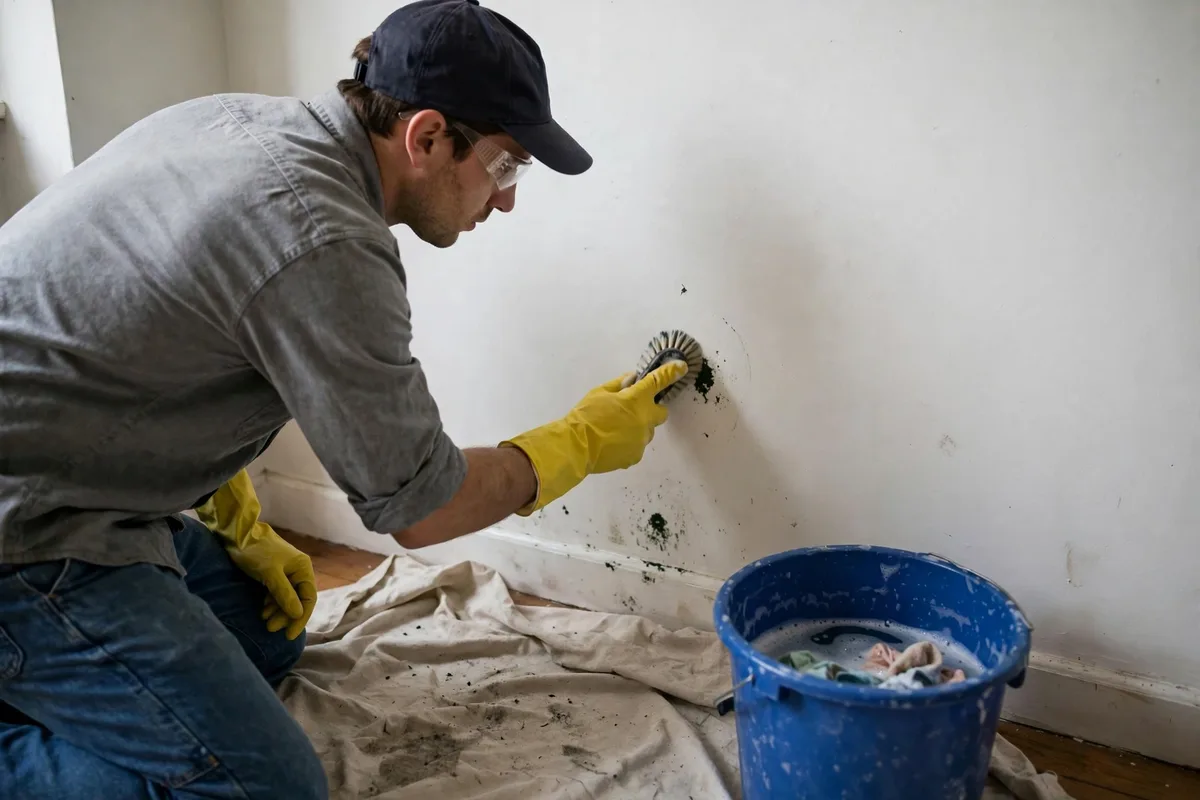
- Ventilate the room and wear gloves. Avoid breathing in dust from dry, disturbed growth.
- Clean the surface with a household cleaner, working gently so you do not spread spores into the air.
- Throw away cloths and sponges afterwards, and wash your hands.
- Fix the moisture source: repair the drip, improve bathroom ventilation, or wipe condensation that keeps forming.
- Watch the spot for two to three weeks. If it returns, the growth or the moisture goes deeper than the surface.
Mistakes that make it worse
- Painting over mold. Paint seals the surface while growth continues underneath.
- Scrubbing drywall hard. It spreads spores and damages the surface without removing growth inside the material.
- Mixing bleach with other cleaners. Never combine bleach with ammonia-based products.
- Ignoring the moisture. Cleaning without fixing the leak or humidity guarantees a return visit.
When to call a professional
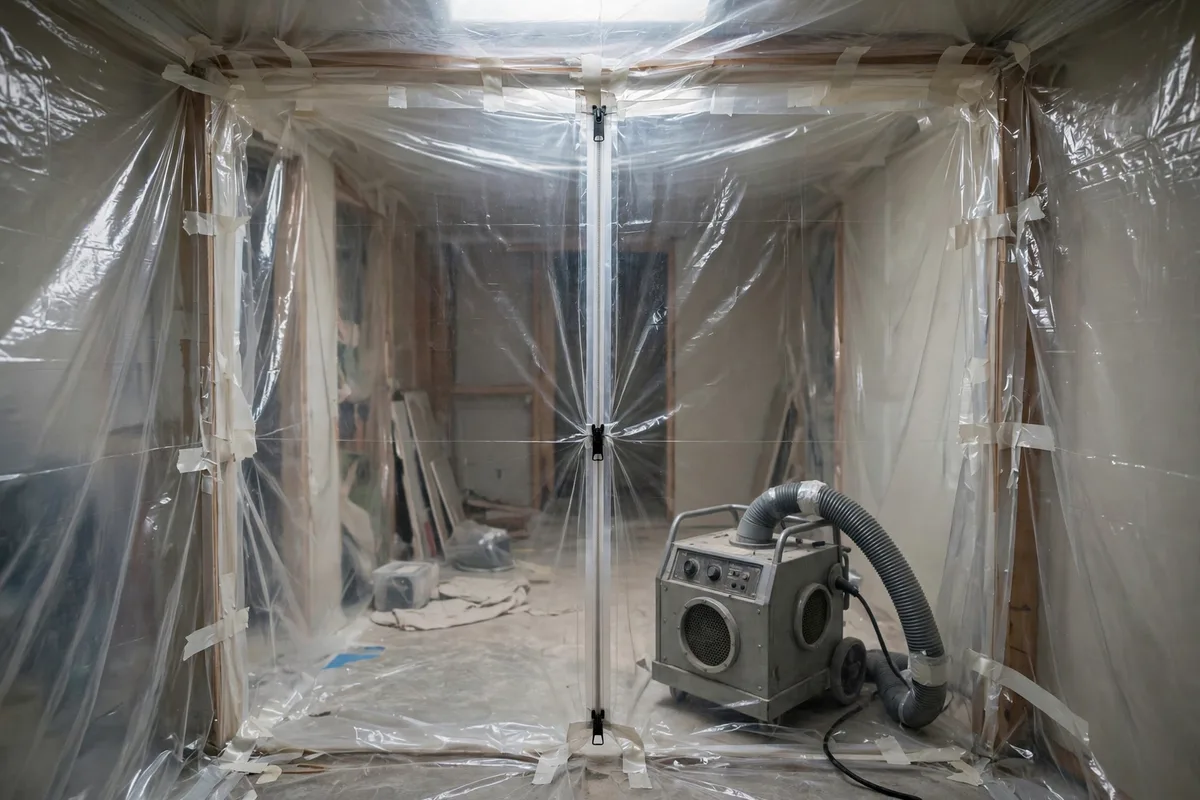
Call when the growth is on porous material, covers a large area, keeps returning, smells musty with nothing visible, or follows a leak or flooding. A professional inspection maps the moisture, checks for hidden growth, and scopes removal to what is actually affected. See how Mold Removal New Orleans handles a job from inspection to dry-out.
What protective gear do you actually need?
For a small patch on tile or glass, the basics are enough: gloves, eye protection if you are scrubbing overhead, and ventilation, with a window open or a fan running. Avoid breathing in dust from dry, disturbed growth, so wear a simple mask for the job and work gently rather than scrubbing hard. Never use a household vacuum on dry mold: it blows spores into the air instead of containing them. Throw away cloths and sponges afterwards and wash your hands. For anything larger, hidden, or on drywall, the gear changes completely: respirators, full protective suits, containment sheeting, and HEPA-filtered equipment. That is professional gear for a professional job, and it is one more reason a large or hidden patch is not a cleaning job.
How to tell when the job is done
A DIY job is done when the surface is clean and dry, the musty smell is gone, the moisture source is fixed, and the spot stays clean for two to three weeks of watching. If any of those fails, the job is not done: a returning patch means moisture or hidden growth is still there. For professional work, the finish line is measured rather than guessed: moisture readings confirm the material is dry, affected porous material is removed, the area is dried with proper equipment, and clearance testing is used where the job calls for it. Keep the area dry afterwards and check it weekly for the first month. A patch that returns after a proper dry-out is not a cleaning failure, it is a sign that the moisture source or the hidden growth was never found.
Frequently asked questions
Can I remove mold myself with vinegar or bleach?
For a small patch on a hard surface, household cleaners work. They do not fix growth inside drywall or wood, or a moisture problem behind the wall.
How do I stop mold coming back?
Fix the moisture source, dry the area fully, and improve ventilation. If it returns after that, hidden growth or an unresolved leak is likely.
Should I test the mold before cleaning?
For a small visible surface patch, testing is usually unnecessary. If growth is hidden, widespread, or recurring, testing during an inspection can help identify what is growing and how far it spread.
How long should I watch a cleaned patch?
Watch it for two to three weeks. If it stays clean and dry and the moisture source is fixed, the job is done. If it returns, growth inside the material or an unresolved leak is likely, and it is time for an inspection.
If a patch is larger than a small surface spot, or it keeps coming back, call (504) 882-0253 for an inspection.