Does Bleach Kill Mold?
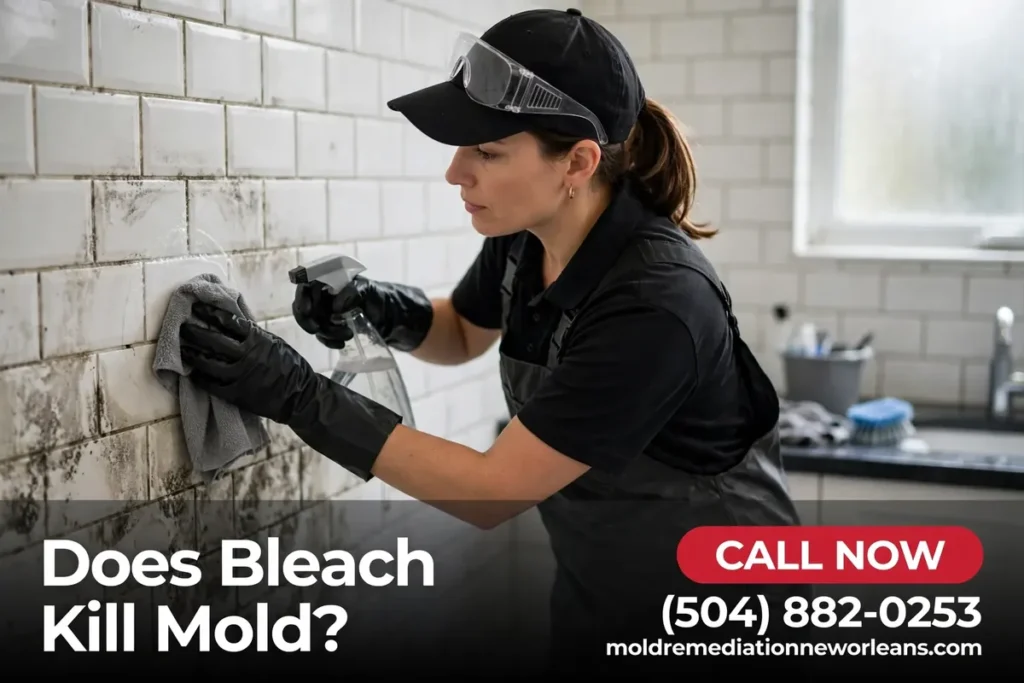
Bleach can kill surface mold on hard, non-porous surfaces — but it does not solve a mold problem on its own. The honest answer is: bleach cleans what you can see, and mold problems are usually about what you cannot see, plus the moisture that keeps feeding it.
Key takeaways
- Bleach kills surface growth on hard, non-porous surfaces like tile and glass.
- On drywall or wood, bleach sits on the surface while its water soaks in — growth inside survives.
- A patch that returns after bleaching means the moisture source or hidden growth is still there.
- Never mix bleach with ammonia or other cleaners — the combination creates dangerous fumes.
What bleach actually does
Household bleach is a disinfectant. On tile, glass, or a sealed countertop, it kills surface growth and lightens the stain. That is why a bleached shower wall looks clean afterwards — on that kind of surface, the job really is mostly done.
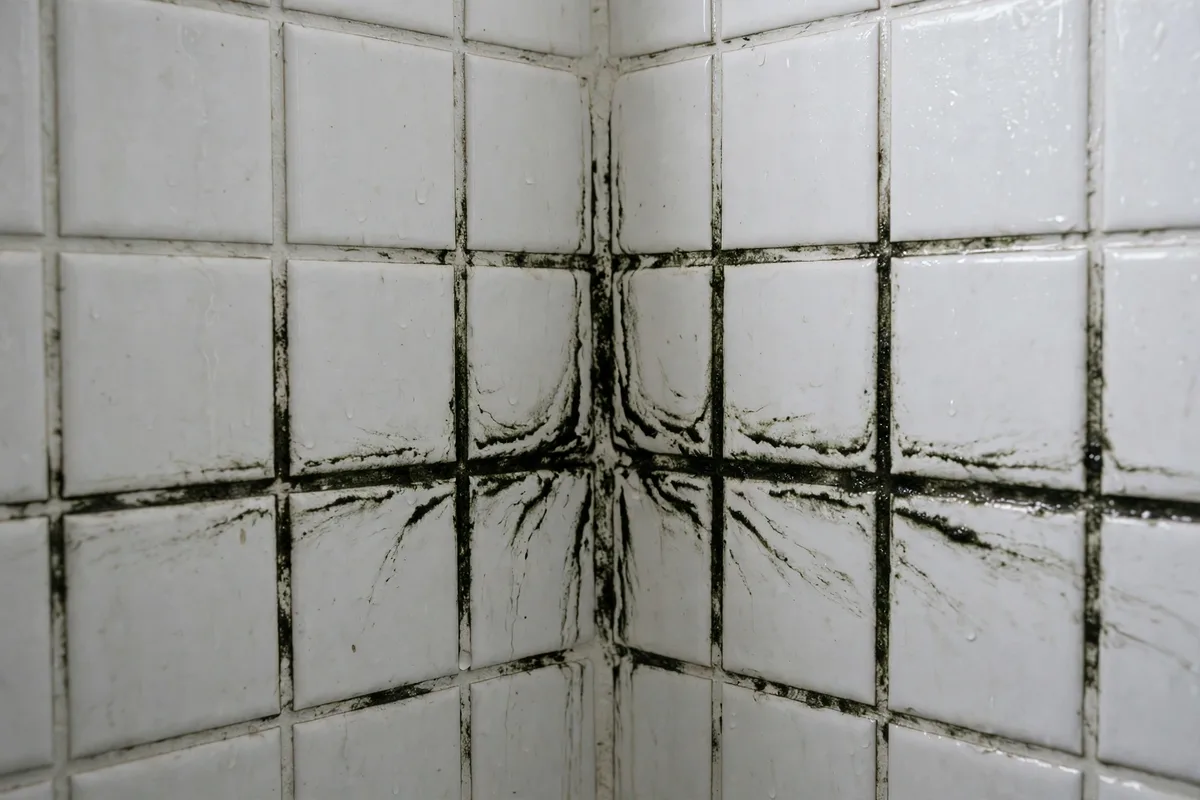
The limits show up on porous material: drywall, wood, grout lines, carpet, and insulation. Bleach sits on the surface while its water content soaks in — and moisture is exactly what mold needs. The roots of the growth inside the material often survive, which is why the patch comes back in the same spot a few weeks later.
What bleach does not do
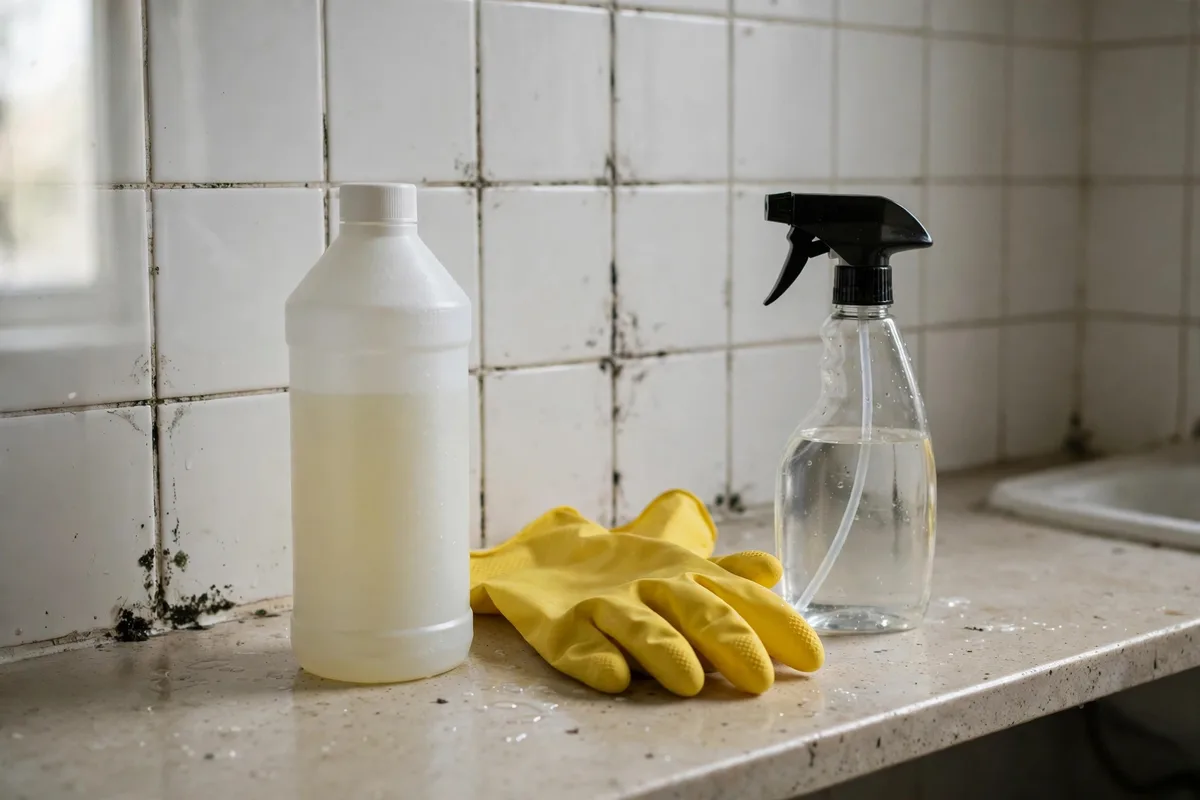
- It does not remove growth inside drywall, wood, or wall cavities.
- It does not dry the material or fix the leak, condensation, or ventilation problem behind the growth.
- It does not make a large or hidden problem safe to handle without protection.
- It should never be mixed with ammonia or other cleaners — that combination creates dangerous fumes.
When bleach is fine, and when it is not
| Situation | Bleach? |
|---|---|
| Small patch on tile, glass, or sealed surfaces | Yes — with gloves, ventilation, and the moisture source fixed |
| Growth on drywall, wood, or carpet | No — surface cleaning only hides it |
| Patch that keeps returning | No — the moisture source or hidden growth needs finding |
| Large area, or growth inside a wall | No — get a professional assessment first |
What professionals do instead
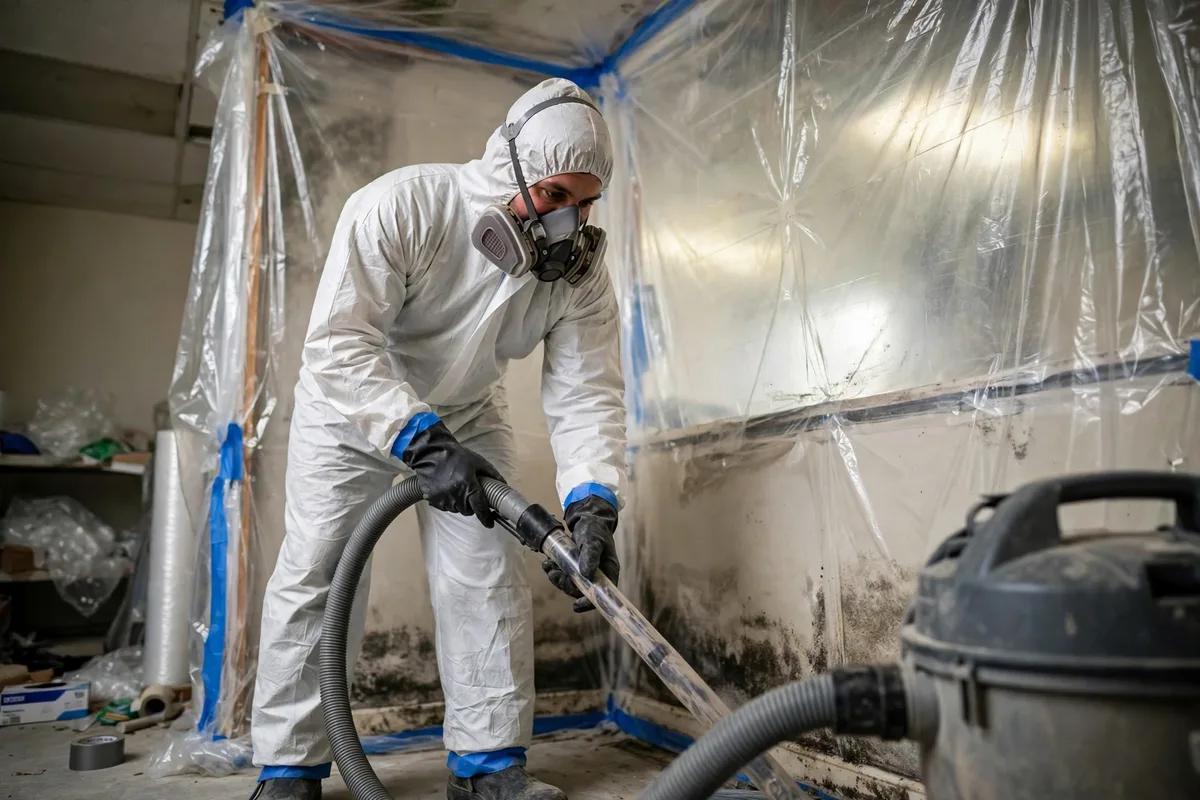
Professional remediation starts with the moisture: finding the leak or humidity source, drying the material with proper equipment, and then removing affected porous material under containment so spores are not spread through the house. Cleaning agents are used, but they are one step in a process — not the process itself. Our Mold Remediation Cost Guide explains what drives the scope of a job, and our Mold Removal New Orleans team can inspect a recurring patch before it spreads further.
What to use instead of bleach on drywall
On drywall, the problem is not the cleaner, it is the depth. Bleach, vinegar, and household cleaners all sit on the surface, while growth inside the drywall stays untouched and keeps feeding on moisture in the material. For a small spot, you can clean the surface with detergent and water, dry the area thoroughly, and watch it, but do not expect a surface wipe to reach growth inside the board. When growth is inside the material, the fix is removal: the affected section of drywall comes out, under containment for larger areas, so spores are not spread through the house. That is remediation work, not cleaning work. If the patch is large, hidden, or keeps returning after the surface is cleaned, an inspection scopes exactly what needs to come out and what can stay.
How to keep a bleached patch from coming back
A bleached patch only stays clean if the moisture that fed it is gone. Fix the drip, the condensation, or the ventilation problem first, then dry the area fully: open the room up, run a fan, and give it days rather than hours, because damp drywall and grout dry slowly in New Orleans humidity. Keep the surface dry afterwards and check the spot once a week for about a month. Wipe up standing water, keep shower grout sealed and dry between uses, and do not stack damp items against the wall. If the patch returns even though the surface is dry, the growth inside the material survived, and more bleach will not change that. At that point, stop bleaching and get the area assessed so the hidden growth is found instead of painted over or bleached again.
Frequently asked questions
Does bleach kill black mold?
On a hard surface, yes, it kills surface growth. On drywall or wood, it does not reliably kill growth inside the material — which is why dark patches on drywall keep returning after bleaching.
Why does the mold come back after I bleach it?
Because the moisture source is still there, or growth inside the material survived. Fix the moisture first; if the patch returns anyway, the growth is deeper than the surface.
Is bleach safe to use on mold?
In a ventilated space, with gloves, and never mixed with other cleaners, yes for small surface jobs. For large areas or hidden growth, do not rely on bleach — get the area assessed.
Can I use bleach on mold in the shower grout?
Grout is porous, so bleach may lighten the stain on top while growth inside the grout lines survives. Scrub the grout lines with a household cleaner, dry the shower area, and improve ventilation. If dark grout stains keep returning, the growth is deeper than the surface and needs an assessment.
If a patch keeps returning after cleaning, call (504) 882-0253 to arrange an inspection.