Mold vs Mildew: What’s the Difference?

Mold and mildew are both types of fungal growth, but they are not the same thing — and the difference matters for what you do next. Mildew is usually a surface-level growth. Mold can grow into the material underneath it, which is why a patch that keeps coming back deserves a closer look.
Key takeaways
- Mildew stays on the surface; mold can grow into drywall, wood, and other porous material.
- Color alone does not identify a species — a dark patch is not automatically “black mold.”
- A patch that keeps coming back after cleaning usually means moisture or growth inside the material.
- Small surface growth on tile or glass can be cleaned; growth on drywall or wood needs an inspection.
How to tell them apart
| Mildew | Mold | |
|---|---|---|
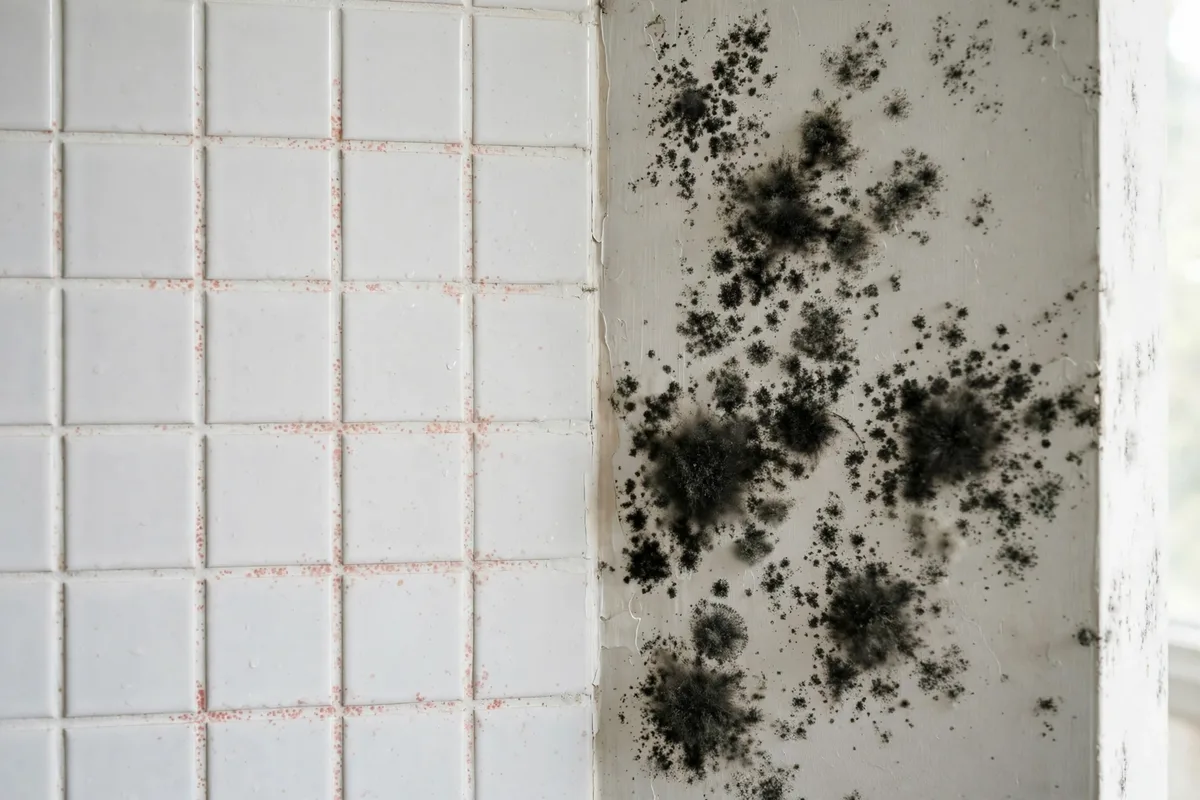
| Look | Usually flat, powdery, white or light gray | Often fuzzy or slimy, and can be black, green, brown, or spotted |
| Where it grows | Damp surfaces: shower walls, window sills, bathroom grout | Damp surfaces too — but also inside drywall, under flooring, and in wall cavities |
| Depth | Stays on the surface | Can grow into porous material like drywall and wood |
| Smell | Mildly musty, or no smell | Often a stronger musty smell, especially in an enclosed room |
Color alone does not identify a species. A dark patch is not automatically “black mold,” and a light patch is not automatically harmless. If you need to know what is growing, that takes testing — see our Mold Inspection & Testing page.
When it is more than mildew
Call the growth “more than mildew” when any of these are true: it keeps coming back after cleaning; it covers a large area, or it is spreading; it is on drywall, wood, carpet, or insulation rather than tile or glass; the room smells musty even when nothing is visible; or there was a leak, flooding, or ongoing dampness behind that wall.
In New Orleans, humidity makes all of this more likely. A wall that got wet on Friday often will not dry on its own by Monday, and growth inside the material can continue long after the surface looks clean.
What you can safely do yourself
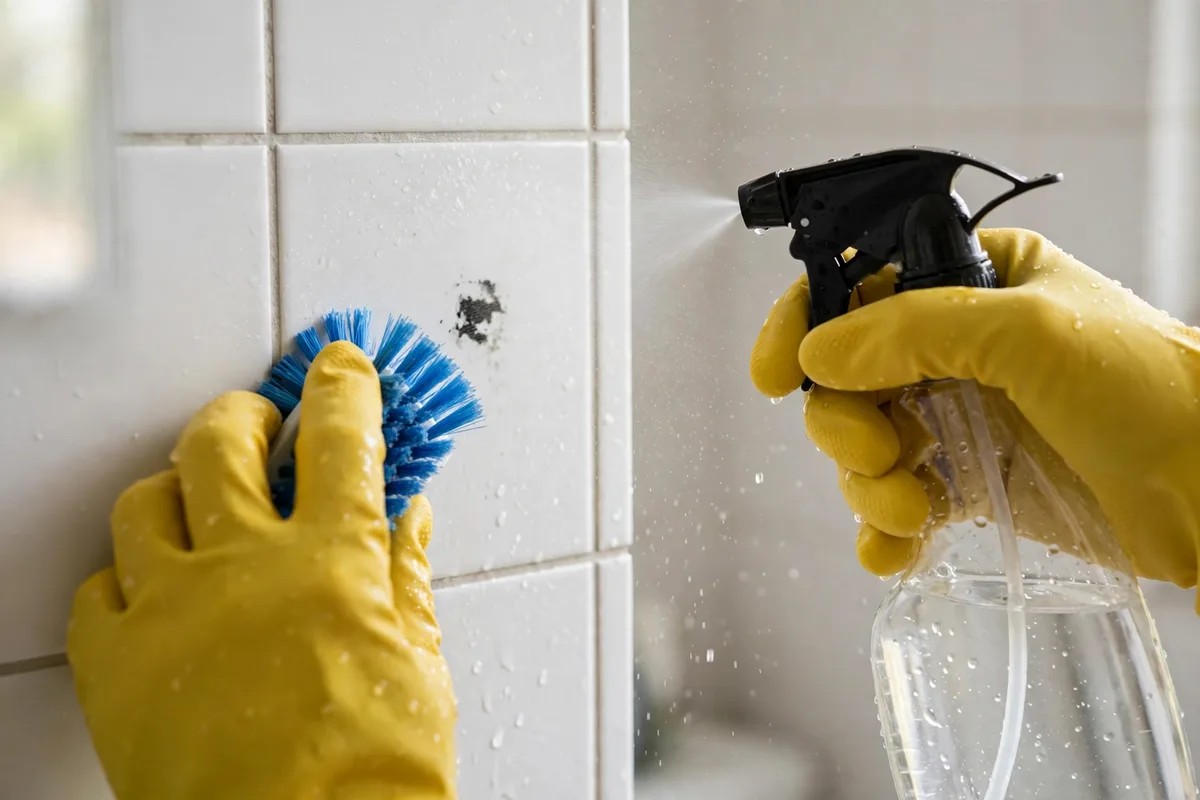
For a small patch of surface growth on a hard, non-porous surface — tile, glass, or a sealed countertop — you can clean it with household cleaner, gloves, and ventilation, and then fix the moisture that caused it: a dripping fixture, poor bathroom ventilation, or condensation. Throw away cleaning cloths and sponges afterwards.
Stop and get help instead when the growth is on drywall, wood, or carpet, when it covers a large area, when it is inside a wall cavity or under flooring, or when you cannot find where the moisture is coming from. Scrubbing growth on drywall usually only cleans the surface while the material underneath stays damp — and painting over it hides the problem without fixing it.
When to call a professional
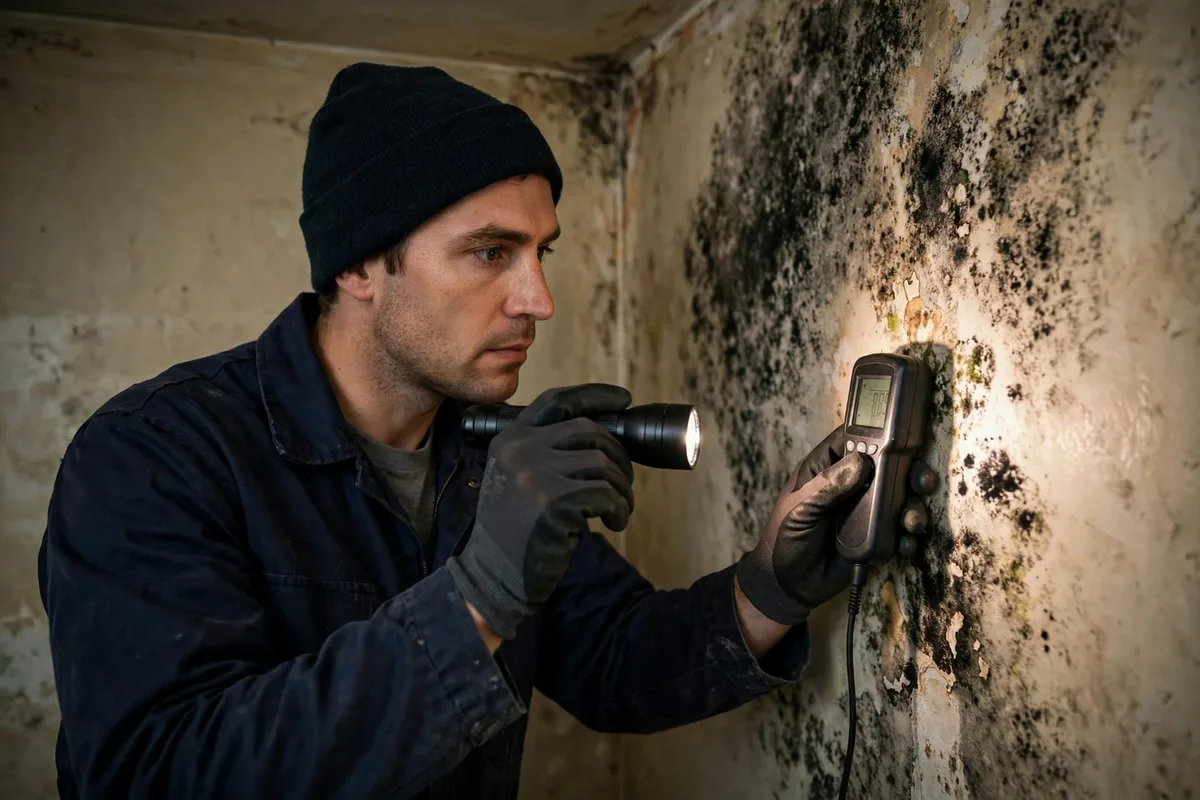
If the patch returns, spreads, smells, or sits on porous material, an inspection is the sensible next step. An inspector maps how far the moisture travelled, checks for hidden growth, and can recommend testing where it helps. From there, removal work is scoped to what is actually affected — see how Mold Removal New Orleans approaches a job.
What mildew needs to become a bigger problem
Mildew on its own stays on the surface, but the conditions that grow it can turn a small patch into a bigger job. The three things that matter are ongoing dampness, time, and the material underneath. A mildew patch on shower grout in a steamy bathroom with no working vent fan gets fresh moisture every day, so it spreads instead of drying out. The real change happens when dampness reaches porous material behind the surface: drywall, wood, or the paper backing of a wall panel. Once growth moves into that material, cleaning the surface no longer reaches it, and the patch starts returning within days of every clean. That is why the fix is always about the moisture first. Dry the area, fix the drip or the ventilation, and a surface patch usually stays a surface patch.
Do you need a test to tell them apart?
For a small patch on tile or glass, usually not. The look, the depth, and whether it comes back after cleaning tell you enough to act: clean a surface patch, fix the moisture, and watch it. Testing earns its place when the patch is large, hidden inside a wall, or keeps returning after the moisture source is fixed, or when you need a written result for a landlord, a buyer, or an insurer. An inspection comes first in those cases: the inspector maps the moisture, checks the material behind the patch, and samples only where the result would change the scope of the work. See how Mold Inspection & Testing works, and what sampling can and cannot tell you. A test result on its own does not fix anything: it is useful when it decides what gets removed and what stays.
Frequently asked questions
Is mildew a type of mold?
Mildew is a common name for a flat, surface-level fungal growth. Professionals treat it as a milder, surface-only problem — but only an inspection can confirm what is growing in your home.
Can I just bleach it?
Bleach can clean surface growth on hard surfaces, but it does not fix growth inside porous material, and it does not fix the moisture source. Our guide on bleach and mold covers this in detail.
I have health concerns about mold — what should I do?
This guide cannot diagnose anything. If you have health concerns, talk to a medical professional, and get the growth itself inspected so you know what you are dealing with.
Can mildew turn into mold?
Mildew and mold are different growths, so one does not turn into the other. But the same damp conditions that grow mildew can also grow mold nearby, especially on porous material, so a mildew patch that keeps spreading in a damp room is a warning to fix the moisture, not just clean the surface.
If a patch in your home keeps coming back or sits on drywall or wood, call (504) 882-0253 to arrange an inspection.